
James Webb Space Telescope captures the star-forming clouds of Orion A
Located around 1,300 light-years from Earth and situated to the south of Orion’s Belt in the night sky, Orion A is one of the largest and closest molecular clouds to our planet. Shaped like a filament, this structure of gas and dust is around 290 light-years long.
Part of the Orion molecular cloud complex, Orion A is a packed stellar nursery, it is estimated that Orion A has given birth to around 3,000 stellar objects. Every stage of star formation , from the youngest stellar embryos, to protoplanetary discs, to newly-minted pre-main sequence stars is contained within just this scene, which stretches 150 light-years across.
RAL Space, based at Harwell Campus, was part of a European Consortium that was responsible for the development and launch of the Mid-Infrared Instrument (MIRI), one of four scientific instruments on board the James Webb Space Telescope, and the instrument responsible for the spectacular images that have been released by NASA.
Webb is the largest, most powerful telescope ever launched into space and these are the most detailed images ever captured of our universe. They have resulted from the culmination of over 20 years hard work and scientific innovation, revealing the power of Webb and showcasing the possibilities for observing and studying the cosmos.
The MIRI development was funded by the UK Space Agency and STFC, with UK Government funding, and ESA.
Image credit:
The James Webb Space Telescope Picture of the Month shows the giant molecular cloud Orion A, an area of the sky replete with star-forming clouds. (Image credit: ESA/Webb, NASA & CSA, T. Megeath, M. Zamani (ESA/Webb) Acknowledgement: M. H. Özsaraç)
Related news
-

New milestone reached with unique electron microscope for tomography: years in the making and brought to life through close collaboration
The Rosalind Franklin Institute and Thermo Fisher Scientific have reached a major milestone in their long running collaboration to develop a unique research instrument based on the Krios cryo transmission electron microscope. Specially configured to address some of the challenges in imaging cells and tissues, the system has now completed installation, commissioning and acceptance and…
-
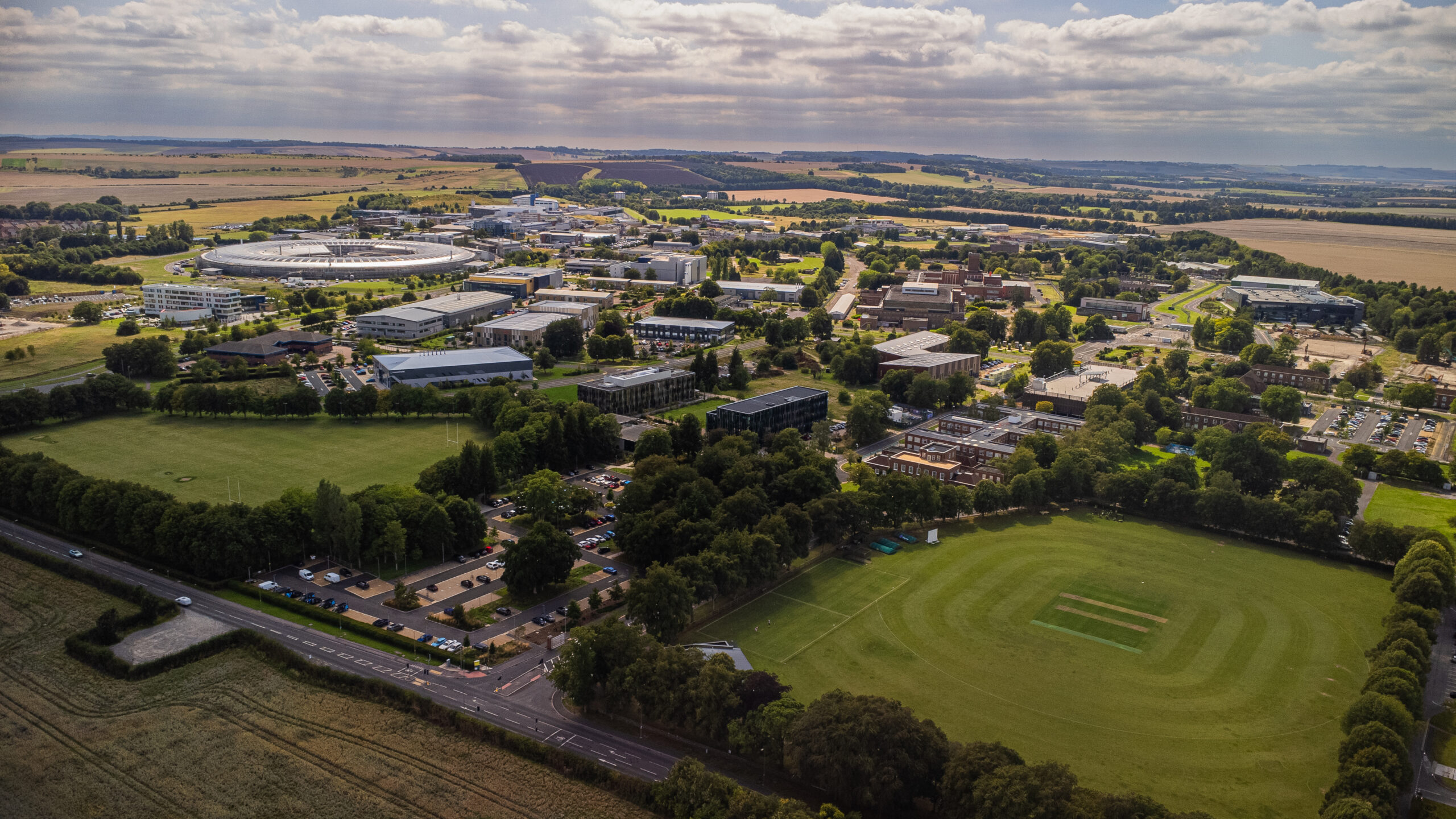
Harwell Campus Publishes Vision 2050 for Future Growth
Harwell Science and Innovation Campus has published Vision 2050, its plan for how the campus will grow over the next 20+ years, and launched a second public consultation inviting local communities, businesses and stakeholders to help shape the Vision. Building on more than eight decades of cutting-edge research, Vision 2050 shows how the 700-acre campus…
-
Element Six and Entegris Announce Strategic Collaboration to Integrate Synthetic Diamond into Semiconductor Advanced Packaging for GPU and RF Devices
Element Six (E6), a world leader in synthetic diamond industrial solutions, and Entegris, Inc., a leading supplier of advanced materials and surface engineering for the semiconductor industry, today announced a strategic collaboration to accelerate the integration of diamond-enabled thermal management solutions into advanced packaging for graphics processing unit (GPU) and radio frequency (RF) devices, which…
