80 Years of Innovation: From Atomic Research to the Science Shaping Our Future
For much of Harwell’s early life, what happened here was hidden from public view.
Established in 1946 as the Atomic Energy Research Establishment, Harwell was at the heart of Britain’s post-war nuclear research programme. It was a place of secrecy, pioneering science and extraordinary ambition, where some of the country’s brightest minds were brought together to tackle challenges at the very edge of human understanding.
Eighty years later, that ambition remains. But Harwell today is a very different place.
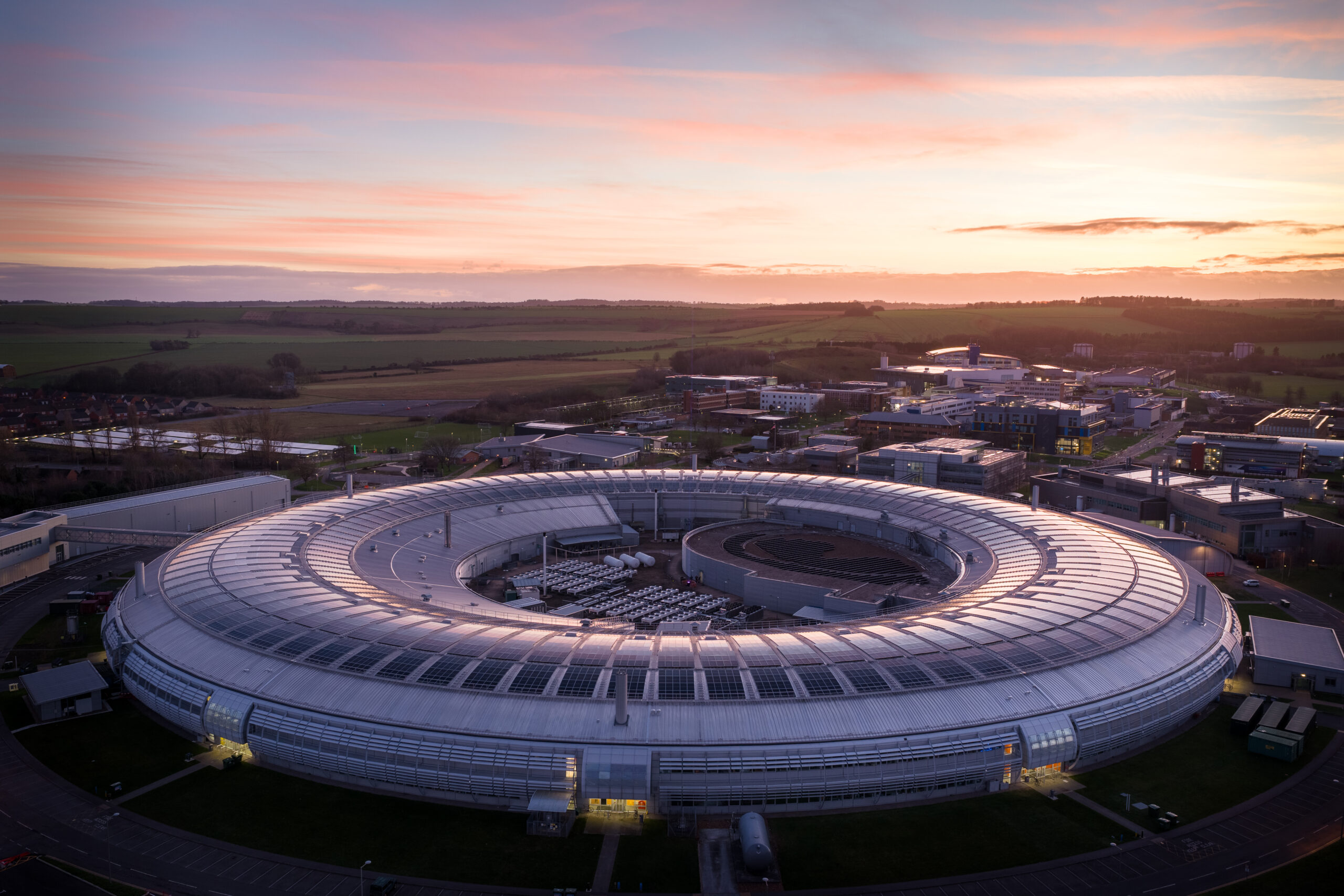
What was once a top-secret research establishment has evolved into a 700-acre science and innovation campus, bringing together more than 7,500 scientists, engineers, technicians and entrepreneurs working across space, life sciences, quantum, energy and security and defence.
You can explore Harwell’s extraordinary journey in ITV News’ recent feature, which looks back at the campus’ transformation from a top-secret atomic research site into the science and innovation powerhouse it is today.
As ITV News recently explored in its feature, the physical remnants of the campus’ nuclear past are gradually disappearing. But the culture of discovery it helped establish continues to define the campus.
And perhaps that is the real story of Harwell’s 80th anniversary: not simply what has happened here, but how one generation of discovery creates the foundations for the next.
Eight decades of firsts
Harwell’s history is filled with moments that have changed our understanding of science and, in many cases, our everyday lives.
In 1947, GLEEP became the first nuclear reactor to operate in Western Europe. In 1953, Harwell’s Electronics Division assembled CADET, one of the world’s earliest transistorised computers. In 1961, Dr Mary Lyon’s work led to the discovery of X-chromosome inactivation, a fundamental contribution to modern genetics.
The decades that followed saw Harwell researchers contribute to the development of technologies ranging from lithium-ion batteries to the Rutherford Cable now used within CERN’s Large Hadron Collider. That same thread of discovery continues today.
Diamond Light Source, the UK’s national synchrotron, allows scientists to examine everything from viruses and vaccines to advanced materials at an extraordinary scale. Now, Diamond-II represents the next generation of that capability, with a comprehensive series of upgrades to optics, detectors, sample environments, sample delivery capabilities and computing, enabling scientists to study materials and biological processes with even greater precision.
In the space sector, RAL Space has supported more than 200 missions and projects over more than five decades. Its scientists and engineers have contributed to missions including ESA’s Rosetta mission and the MIRI Instrument aboard the James Webb Space Telescope – technology developed at Harwell that is now helping us see further into the Universe than ever before.
A unique concentration of capability
There are many places around the world that are excellent at science. What makes Harwell unusual is the breadth of capability concentrated in one location – and the connections between it.
National facilities including Diamond Light Source, the Central Laser Facility, ISIS Neutron and Muon Source, RAL Space and the National Quantum Computing Centre sit alongside research institutes, universities, start-ups, scale-ups and global companies.
Together, they create an environment where a problem in one discipline can potentially find an answer in another.
A life sciences company might use Diamond to understand the structure of a protein. A materials company can access advanced imaging and neutron capabilities. A space business can develop technology alongside one of Europe’s largest concentrations of space expertise and access specialist facilities to test equipment before it leaves Earth.
The clustering effect of infrastructure, expertise, businesses and people is difficult to replicate and is increasingly important as scientific challenges become more complex and disciplines converge.
Where discovery becomes commercial success
Harwell has a unique collection of 15 national laboratories. They don’t just enable scientific discovery; they also provide the starting point for entirely new technologies and businesses.
One of the best examples began with research at STFC’s Central Laser Facility.
Scientists developed new Raman spectroscopy techniques capable of identifying materials through opaque barriers. That research ultimately led to the creation of Cobalt Light Systems, which turned the technology into commercial products for industries including pharmaceuticals and airport security.
The company was acquired by Agilent Technologies in 2017, with Harwell subsequently becoming Agilent’s global centre for Raman spectroscopy.
It’s a powerful example of the journey Harwell is designed to enable. Fundamental scientific insight becoming intellectual property, a spin-out, a growing business and ultimately a global business. Agilent’s technology was recently installed at passenger security checkpoints at FIFA World Cup U.S. host city airports to help improve traveller experience. The connection between publicly funded research, national labs and commercial innovation is one of Harwell’s greatest strengths.
Creating the spaces where science can thrive
World-class labs are only part of what scientists and businesses need to succeed. They also need the right spaces in which to work, collaborate and grow. Today, that means creating everything from coworking and accelerator environments for start-ups and spin-outs, through to fitted laboratories, advanced manufacturing facilities and bespoke buildings for global organisations.
The aim is to give businesses the flexibility to start, scale and stay within the ecosystem, growing without losing the connections to facilities, expertise and other organisations that helped them succeed in the first place. But increasingly, it isn’t simply about what we build. It’s about how we build it – and the people we are building it for.
That thinking is embodied in Lumen, a 17,000 sq. ft CL2 laboratory and office building and the UK’s first fully fitted neuroinclusive laboratory workspace.
The fit out at Lumen grew from research by ARC, HOK and the University of the West of Scotland into how traditional laboratory environments affect the people working within them. The findings challenged us to think differently about what a high-performing scientific workplace should look and feel like.
The result is an environment designed around different sensory needs and ways of working. Neurozones provide a choice between collaborative, communal, quiet and focused spaces, while acoustic treatments, adaptable lighting, biophilic design and carefully considered layouts help create a calmer and more inclusive workplace. Even laboratory benches have been reconsidered, with rounded ends introduced to encourage collaboration and create a more comfortable environment.
The principles pioneered at Lumen are now influencing the next generation of space at Harwell, including CO:LABS, our new health tech innovation hub, which combines accelerator laboratories, fitted CL2 space and larger scale-up environments with places to meet, exchange ideas and collaborate. Because great science doesn’t happen because of a building. It happens because of the people inside it.
Opening up science
Perhaps one of the most visible differences between the Harwell of 1946 and the Harwell of 2026 is who gets to experience it.
A campus once defined by security gates and secrecy has spent its 80th anniversary inviting people in.
The Light Project has used art, installations, talks and experiences to connect the public with the science taking place across Harwell.
On New Year’s Day, The Beam marked the beginning of the anniversary year by sending the UK’s most powerful display laser into the Oxfordshire night sky from the heart of Diamond Light Source. Reaching up to eight kilometres into the sky, it created a visible symbol of a campus where light has played a central role in decades of discovery.
In January, BODY transformed part of the campus into an immersive exploration of human biology, using light, sound and interactive installations to allow families to experience the complexity of the human body in an entirely different way.
And during May half-term, Luminarium invited visitors to walk through a vast installation of tunnels, domes, light and colour shaped entirely by natural daylight.
Science shouldn’t only be something that happens behind laboratory doors. Creating opportunities for people to encounter it, question it and be inspired by it matters – particularly if we want the next generation to see themselves as part of its future.
From looking back to looking forward
Harwell has changed enormously since scientists first arrived at a former RAF airfield in 1946. The challenges being tackled have changed too from atomic energy to climate change, pandemic preparedness, quantum computing, AI, new medicines and understanding our Universe.
But the fundamental idea behind Harwell Campus has remained unchanged.
Bring exceptional people together. Give them access to extraordinary tools. Create the conditions for ideas to move between disciplines and organisations. And allow discovery to become something that can make a difference beyond the laboratory.
Eighty years on, Harwell’s most exciting chapter should always be the one that comes next.
As we look ahead, our vision is to build on those foundations and ensure Harwell continues to evolve alongside the changing needs of science, innovation and the people driving it. Over the next 20 years, we want to create an even more integrated, sustainable and welcoming campus.
That means continuing to invest not only in world-class laboratories, research facilities and infrastructure, but in the wider environment around them, creating more green and public spaces, better connections across the campus and more places for people to meet, exchange ideas and collaborate.
And we have the space to realise that ambition. With plentiful space to grow within our 700-acre campus, situated within the North Wessex Downs, there is no need to expand beyond our long-established boundaries. Instead, we can focus on making the best use of the space we already have
Our ambition is for Harwell to be more than a place where world-leading science happens. It’s to create a campus where science and discoveries made here can continue to make a difference far beyond Harwell for generations to come.
