
Harwell’s Open Cosmos beats billionaire backed company to secure European satellite licence
Harwell Campus based Open Cosmos has won a highly contested satellite spectrum licence, beating companies backed by US tech billionaire Peter Thiel and Chinese investors. The licence will enable Open Cosmos to build and operate its new sovereign LEO broadband satellite constellation.
The spectrum rights are an important geo-political asset for Europe, marking a significant step forward in the company’s quest to develop independent, resilient space-based communications and data processing infrastructure for the world.
Hubert Büchel, Minister of Home Affairs, Economy and Sport of Liechtenstein says: “This decision underscores Liechtenstein’s commitment to making use of the frequencies allocated to us. We are pleased that, through this filing with Open Cosmos, we are putting them to good and effective use.”
The UK Government was fully supportive of Open Cosmos’ quest to be awarded these scarce filings. Space Minister Baroness Liz Lloyd said: “This is fantastic news for Open Cosmos and for the UK’s thriving space sector. Securing these valuable spectrum filings is a testament to British ingenuity and ambition, and I’m delighted to see a UK company leading the way in building reliable satellite communications systems for the future.
“With the potential to create hundreds of highly skilled manufacturing and engineering jobs at their Harwell facility, this project demonstrates exactly how our space industry is delivering real opportunities for people across the country while cementing the UK’s position at the forefront of the global space economy.”
The company has had a 100% success rate launching telecom, earth observation and scientific satellites for over a decade. Following the award of these filings, it is now applying this proven expertise to satellite connectivity and communications. This unique offering ensures government, enterprise and institutional users across Europe and beyond to truly understand critical situations on Earth in real-time management, supporting quick decision making.
Rafel Jordá Siquier, Founder and CEO of Open Cosmos, said: “Securing these Ka-band Liechtenstein filings is a defining moment for Open Cosmos, as we gain an invaluable opportunity to realise and achieve Europe’s space ambitions and true potential. With our full-stack approach to satellite design, manufacturing, launch and continued operation, we will be quick to deploy and will see our first satellites go up in the coming weeks.”
Open Cosmos, which already provides its full range of services to governments in the UK, Portugal, Greece and Spain, will launch its first two satellites of this new constellation in Q1, 2026. These satellites have been manufactured at Open Cosmos’s headquarters in Harwell, Oxfordshire, with teams across Spain, Portugal and Greece contributing to the programme.
Rocket Lab, one of the world’s leading launch providers, is confirmed as launch partner, with lift-off scheduled from Mahia, New Zealand.
Related news
-
Oxford University Innovation Named as a Founding Member of CO:LABS at Harwell
Oxford University Innovation (OUI) has been announced as a founding partner of CO:LABS, Harwell Science and Innovation Campus’s new landmark development designed to help science and technology businesses connect, collaborate and grow. This strategic partnership marks another milestone in bolstering the resources and expertise available to emerging companies at CO:LABS, as OUI joins The Rosalind…
-
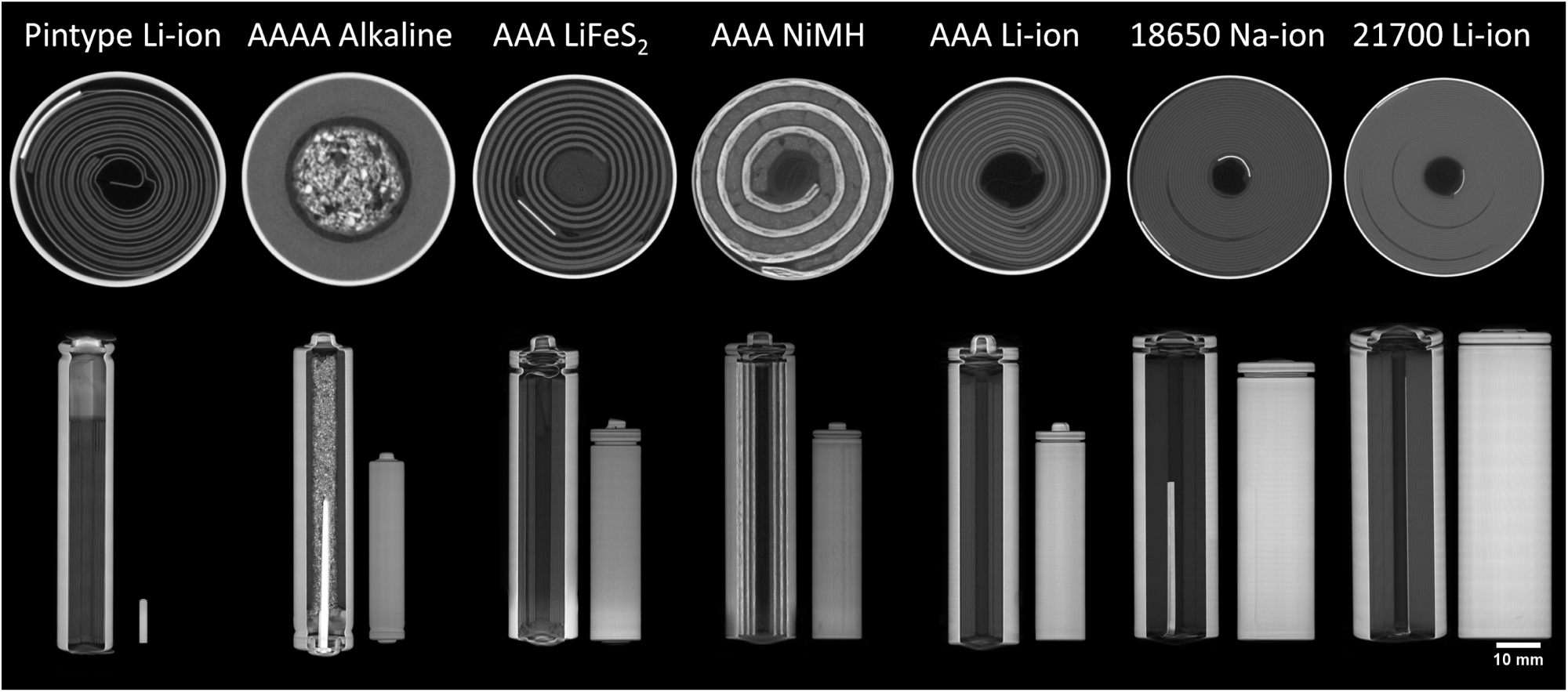
World’s first open-access battery imaging library launches
A collaboration between scientists from Diamond Light Source and the ISIS Neutron and Muon Source has contributed to the development of the world’s first open-access battery imaging library. The library was created through an international collaboration led by Dr Antony Vamvakeros, Royal Society Industry Fellow at Imperial College London and Research and Development Lead at…
-
NATO Secretary General and Prime Minister visit Harwell to see UK space and defence capabilities
Harwell Science and Innovation Campus welcomed NATO Secretary General Mark Rutte and Prime Minister Andy Burnham on Wednesday 16 September, highlighting the strength of the UK’s space, defence and security capabilities. The visit brought together two important areas of the campus: Harwell’s established Space Cluster, home to more than 100 space organisations and 1,400 people,…
