UK science facility commences construction of one of the most powerful lasers in the world
Construction has now begun of the Vulcan 20-20 laser at Harwell Science and Innovation Campus, which when complete will be one of the most powerful lasers in the world when operational in a few years time.
The Central Laser Facility (CLF) was awarded £85 million by UK Research and Innovation for this major upgrade programme.
The CLF, at Harwell Campus, uses a suite of lasers to create the fourth state of matter (in addition t solid, liquid, and gas) known as plasma. The CLF team carries out research using these lasers to investigate a broad range of science areas, spanning physics, chemistry and biology.
Vulcan 20-20 upgrade
The most powerful laser at CLF had been the Vulcan laser, which had a wide range of uses, predominantly in plasma physics. The upgraded Vulcan 20-20 laser will be 100 times brighter than its predecessor, and a million, billion, billion times brighter than the Sahara Desert’s brightest sunlight.
The Vulcan 20-20 laser is so named because it will generate a main laser beam with an energy output of 20 petawatts (PW) alongside 8 high-energy beams with an output of up to 20 kilojoules (kJ). This is a 20-fold increase in power which is expected to make it one of the most powerful lasers in the world.
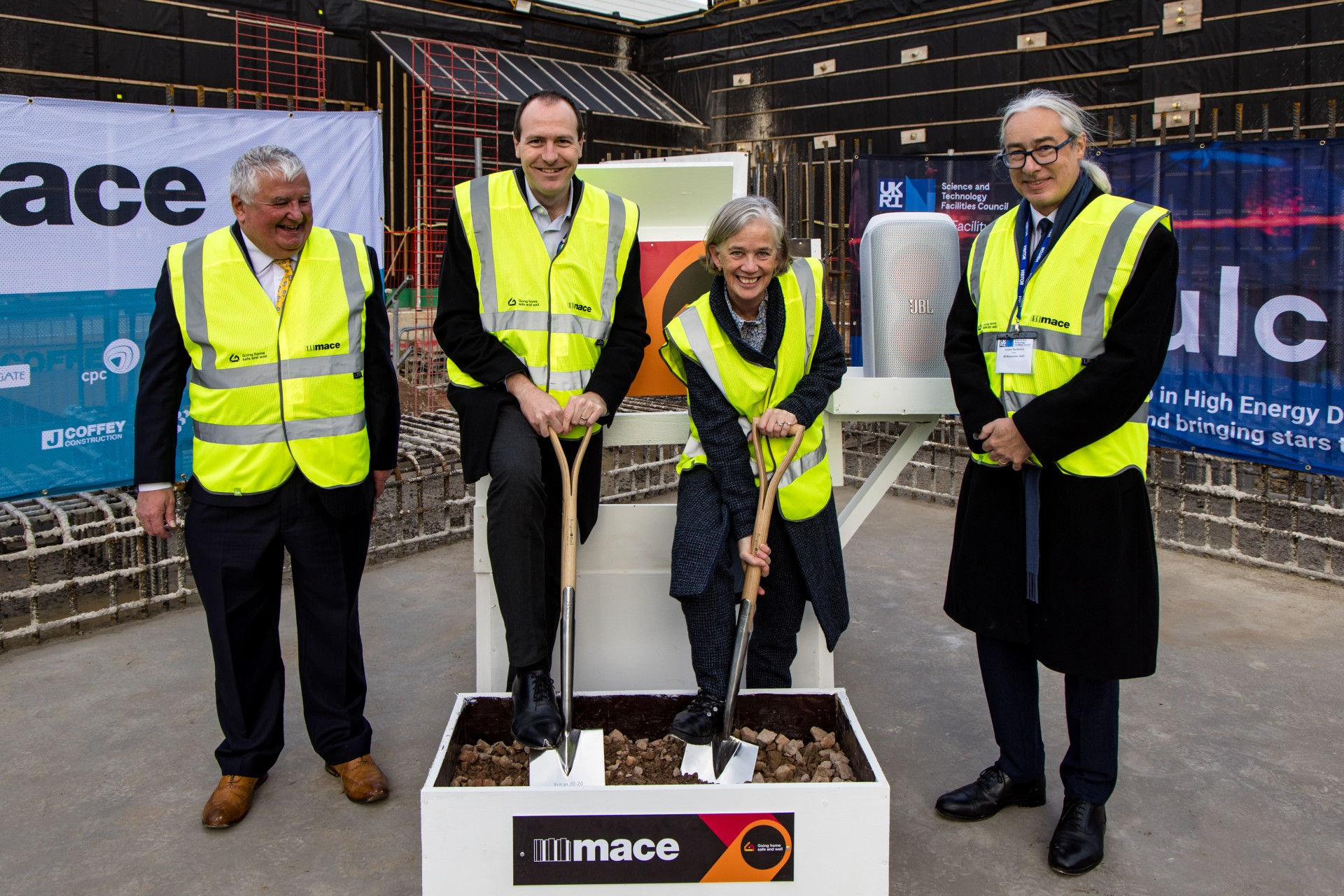
Speaking at the official ground breaking ceremony this week, Professor John Collier, Director of CLF, said: “Vulcan has been the flagship laser at CLF for many years and widely recognised internationally as a pioneering research facility. This major upgrade of Vulcan will help secure UK leadership in High Energy Density Science as well as offering UK industry and researchers access to advanced technology development to aid UK growth.”
Vulcan 20-20 will also support the search for clean energy via the science of laser driven fusion. This upgrade will soon be ready to serve a new generation of scientists, ensuring the UK retains its leadership role in this field.
Pushing scientific boundaries
Planned experiments include creating matter-antimatter pairs using strong electromagnetic fields, usually only found in space, and studying a new particle acceleration method for potential ion radiotherapy treatments to treat cancer.
Image credit: STFC. From left to right: Professor John Collier (Director, CLF), Sir Ian Chapman (CEO of UKRI, Professor Dam Angela Maclean (Government Chief Scientific Advisor), Professor Andrew Randewich (Executive Director, Science, AWE Nuclear Security Technologies).
Related news
-
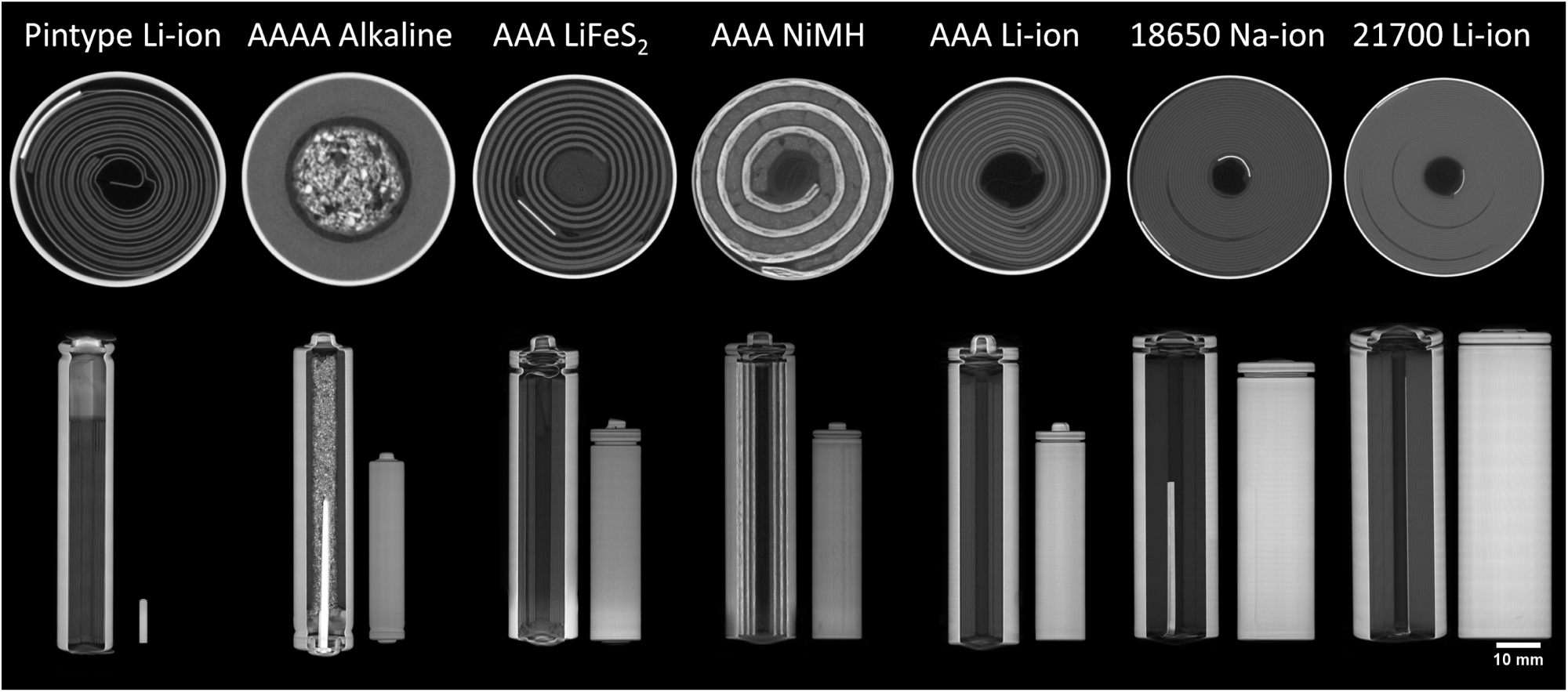
World’s first open-access battery imaging library launches
A collaboration between scientists from Diamond Light Source and the ISIS Neutron and Muon Source has contributed to the development of the world’s first open-access battery imaging library. The library was created through an international collaboration led by Dr Antony Vamvakeros, Royal Society Industry Fellow at Imperial College London and Research and Development Lead at…
-

NATO Secretary General and Prime Minister visit Harwell to see UK space and defence capabilities
Harwell Science and Innovation Campus welcomed NATO Secretary General Mark Rutte and Prime Minister Andy Burnham on Wednesday 16 September, highlighting the strength of the UK’s space, defence and security capabilities. The visit brought together two important areas of the campus: Harwell’s established Space Cluster, home to more than 100 space organisations and 1,400 people,…
-
New funding to support the next generation of medical and materials breakthroughs
Thousands of patients and innovative businesses are set to receive a boost from over £162 million of funding for trailblazing science announced today (Monday 14 September) for two leading research institutes to create the medical technology and materials of the future. Based at Harwell Campus, The Rosalind Franklin Institute, a research centre dedicated to developing new…
